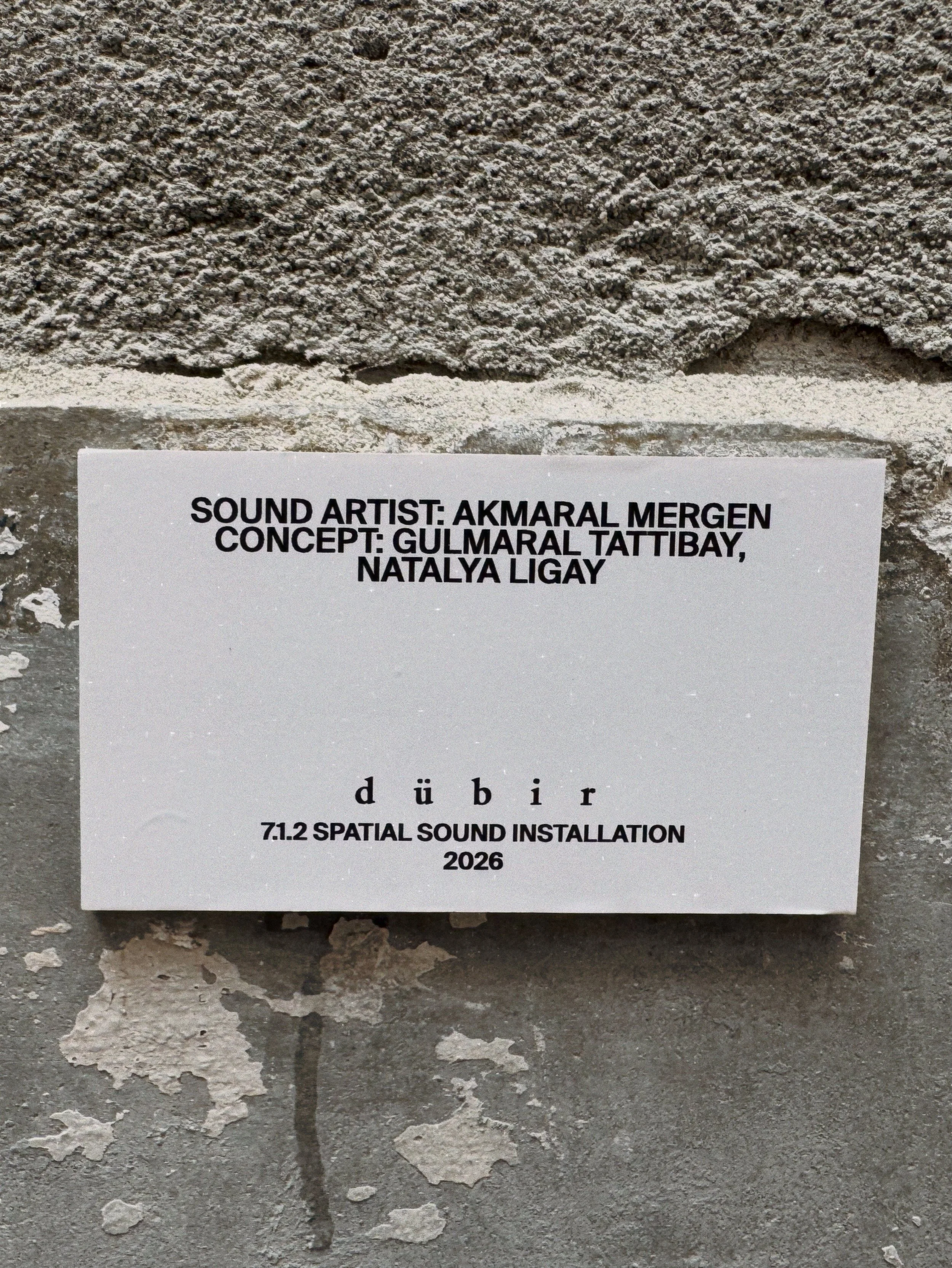
dübir (2026)
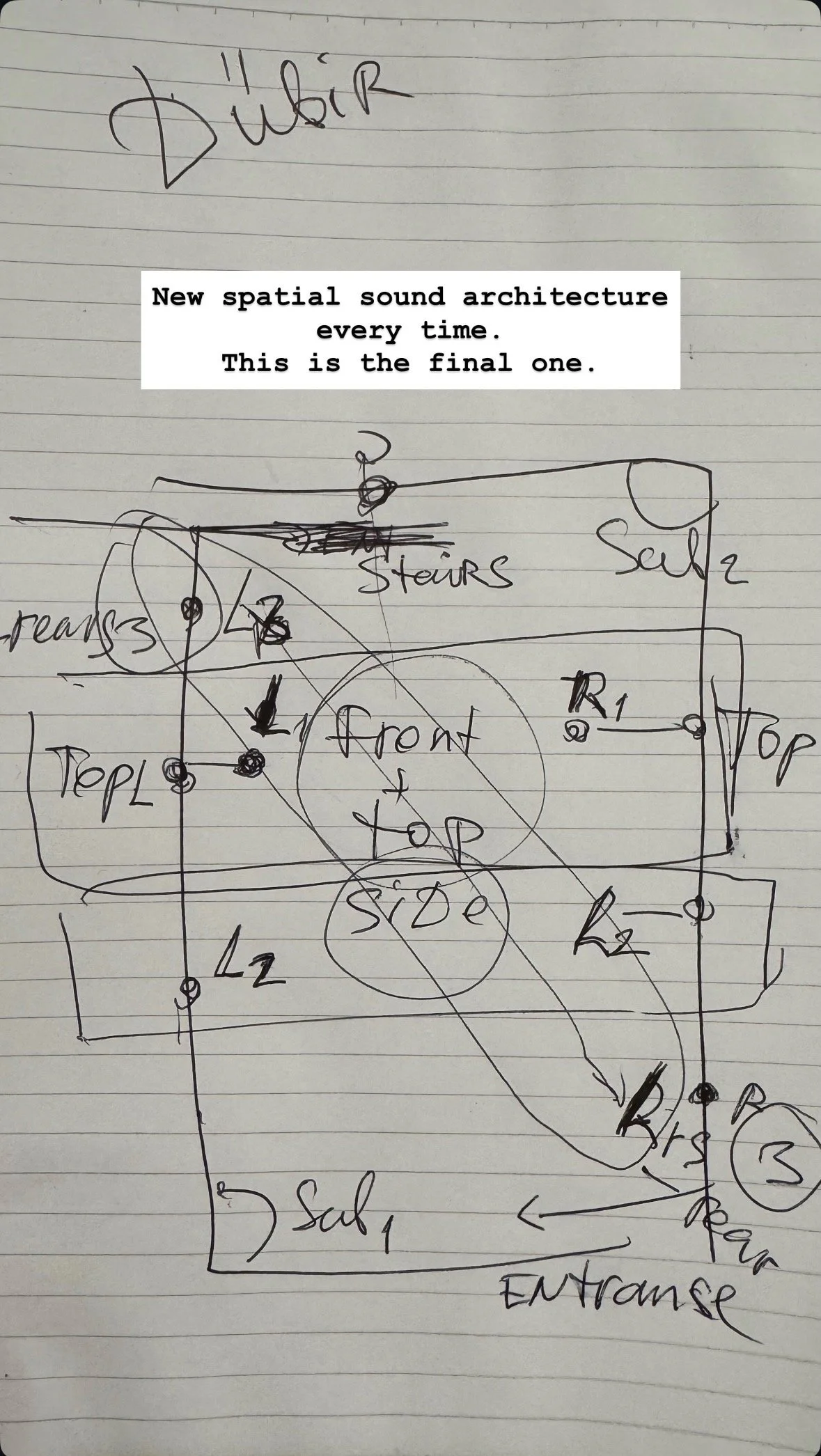
10-channel spatial sound installation (7.1.2)
Sound Artist: Akmaral Mergen
Concept (initial): Gulmaral Tattibay, Natalya Ligay
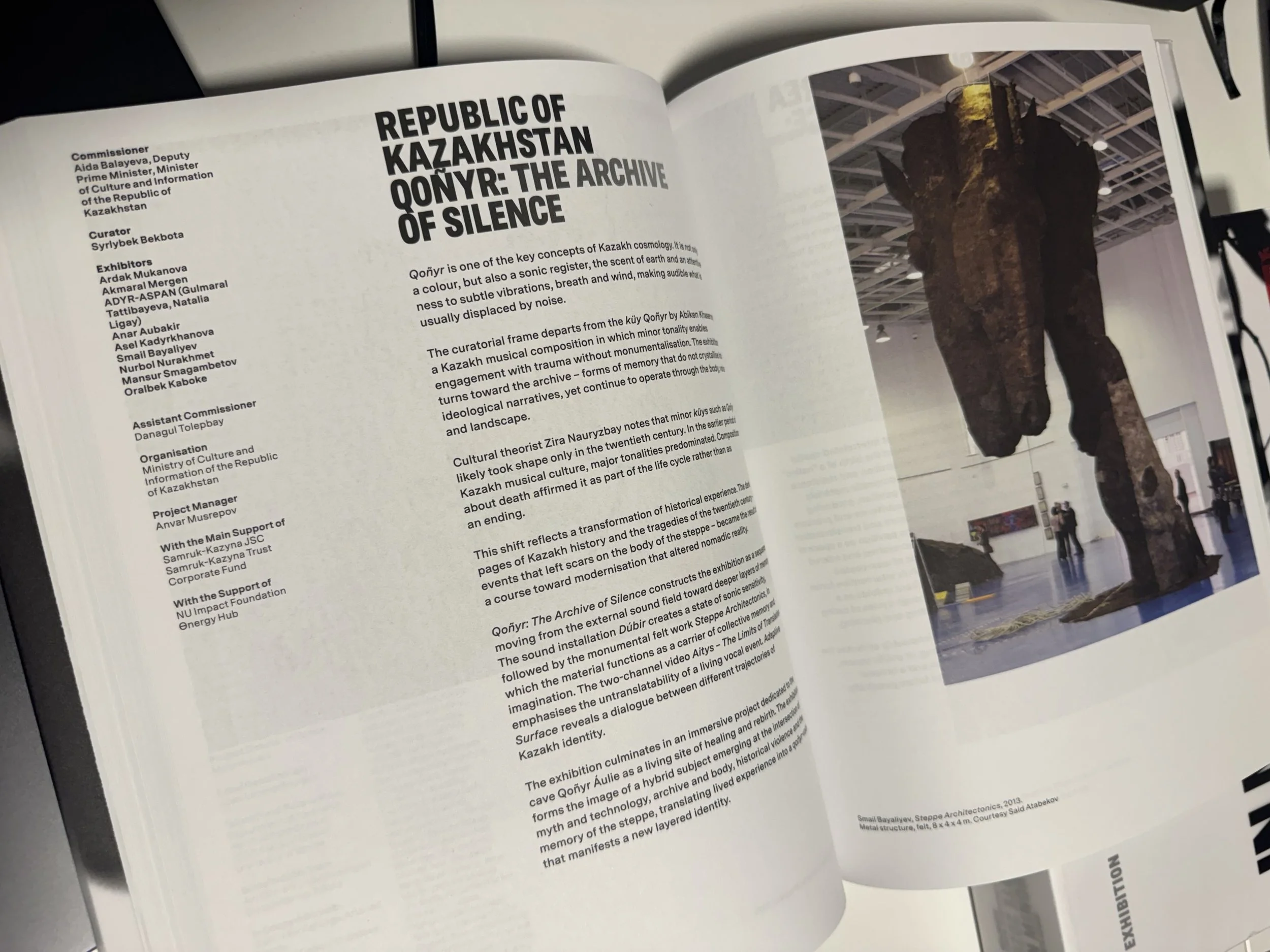
Pavilion of the Republic of Kazakhstan, Qoñyr: The Archive of Silence,
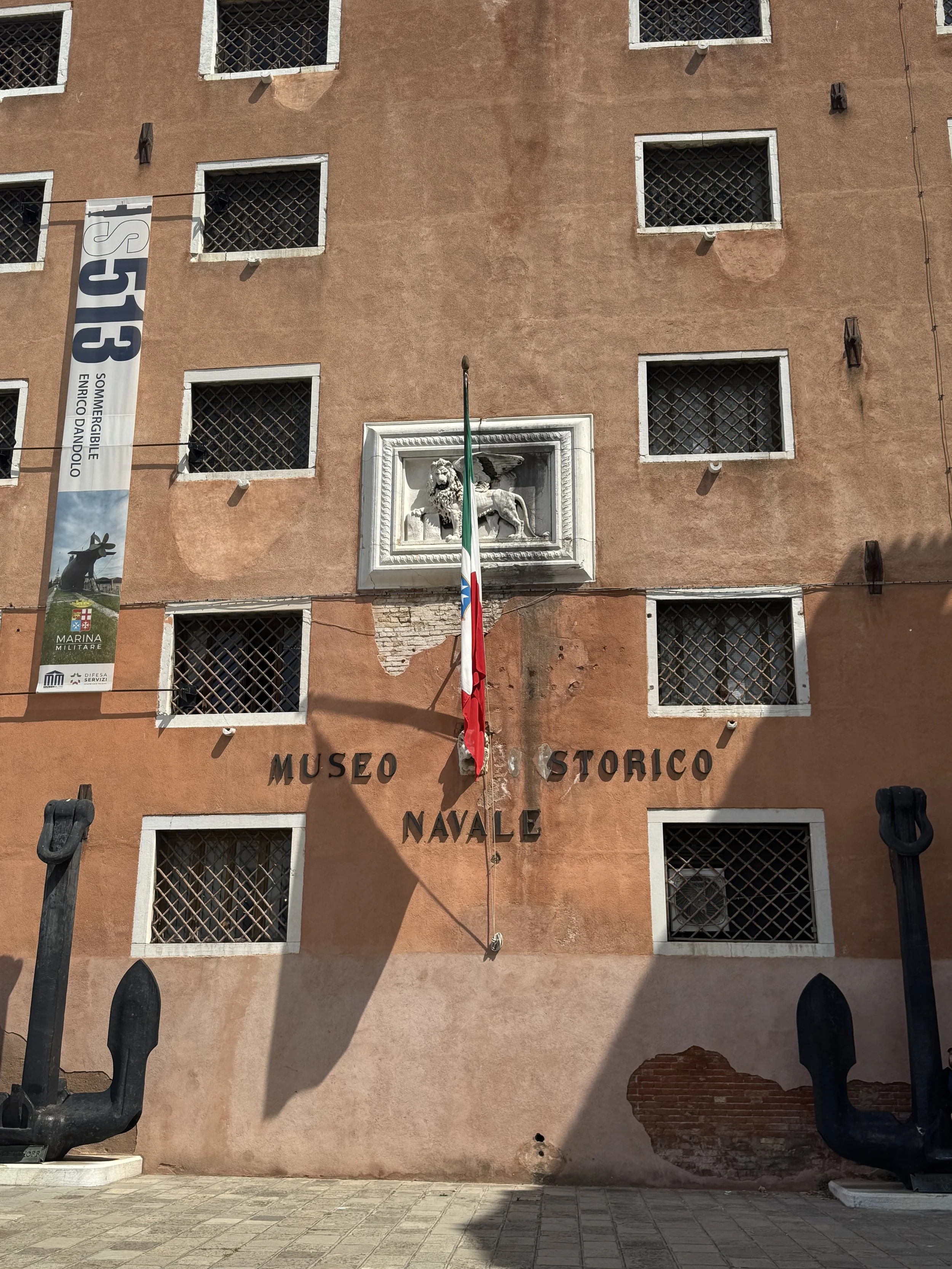
61st International Art Exhibition — La Biennale di Venezia (Museo Storico Navale).
Curator: Syrlybek Bekbota
9 May - 22 November 2026
Context
In 2026 I was the sound artist of the National Pavilion of Kazakhstan at the Venice Biennale, where I created the spatial sound installation dübir (Kazakh: the thunder of hooves, a rumble, the trembling of the earth). The curator Syrlybek Bekbota invited me when the exhibition was already in preparation, and I had to rethink the initial concept proposed by Gulmaral Tattibay and Natalya Ligay in a very short time. The task was a site-specific work that would draw together the acoustics of the whole building.
The installation continues my work with memory and colonial violence, and for me it is personal. It began with the scores I wrote for two documentaries about the Semipalatinsk nuclear test site, Atameken and Atomic Secrets. Witnesses in those films describe how the tests were felt in the body: a rumble, a trembling of the earth like an earthquake. That is where dübir opened up for me in another, far more traumatic register. In film I had been searching for this seismic tremor for a long time. In the space of the Biennale it took on a physical form.
Space
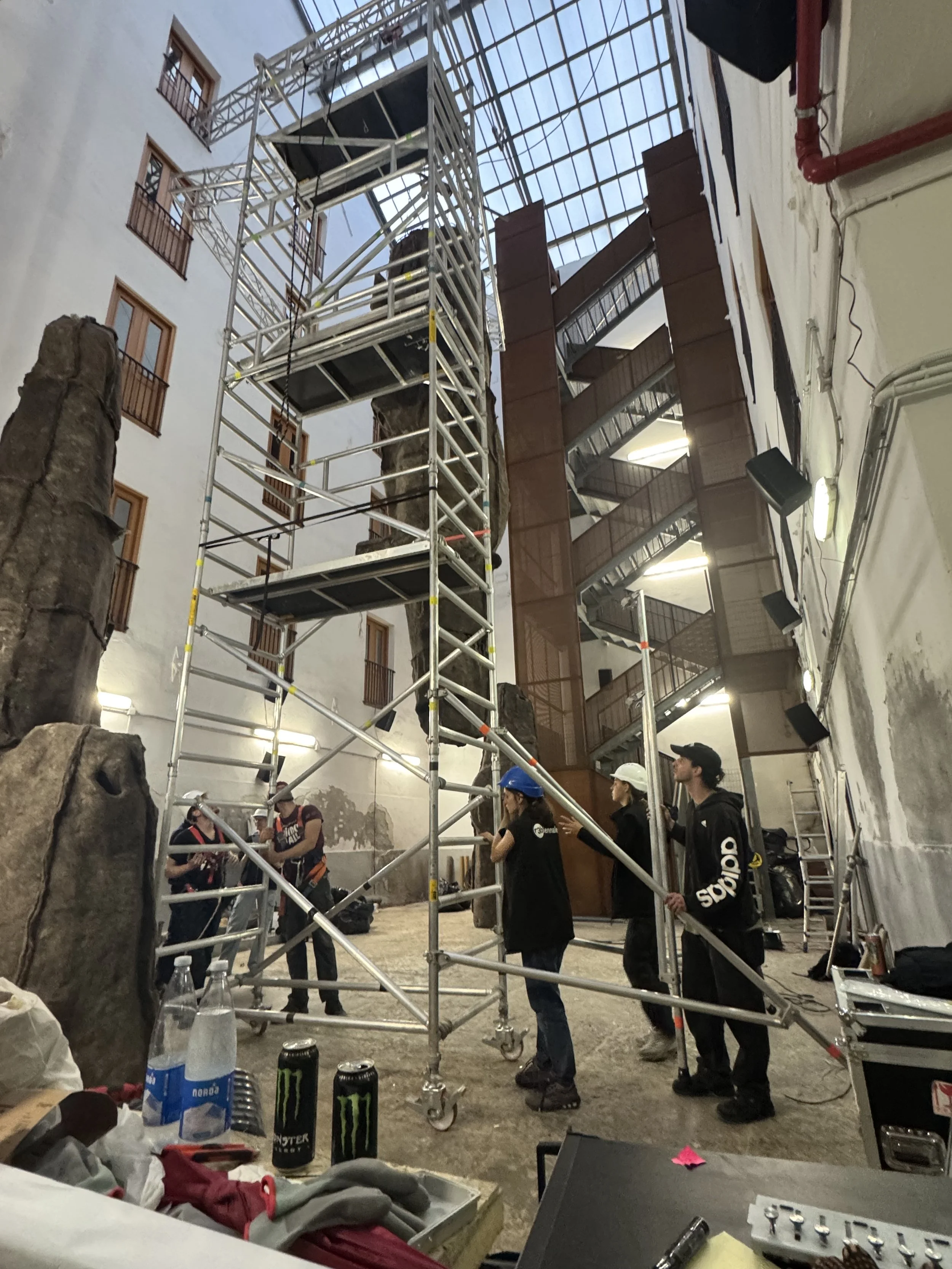
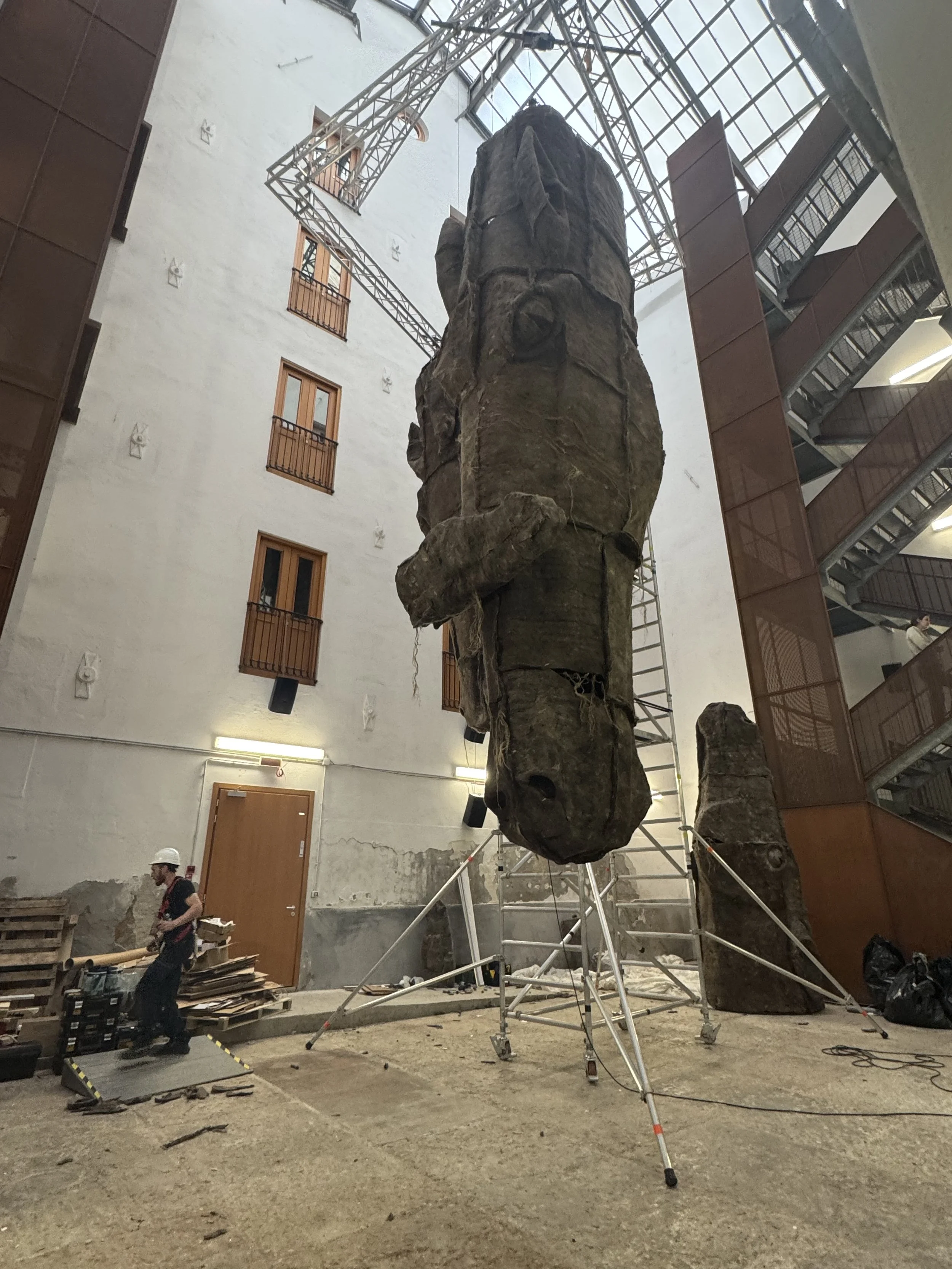
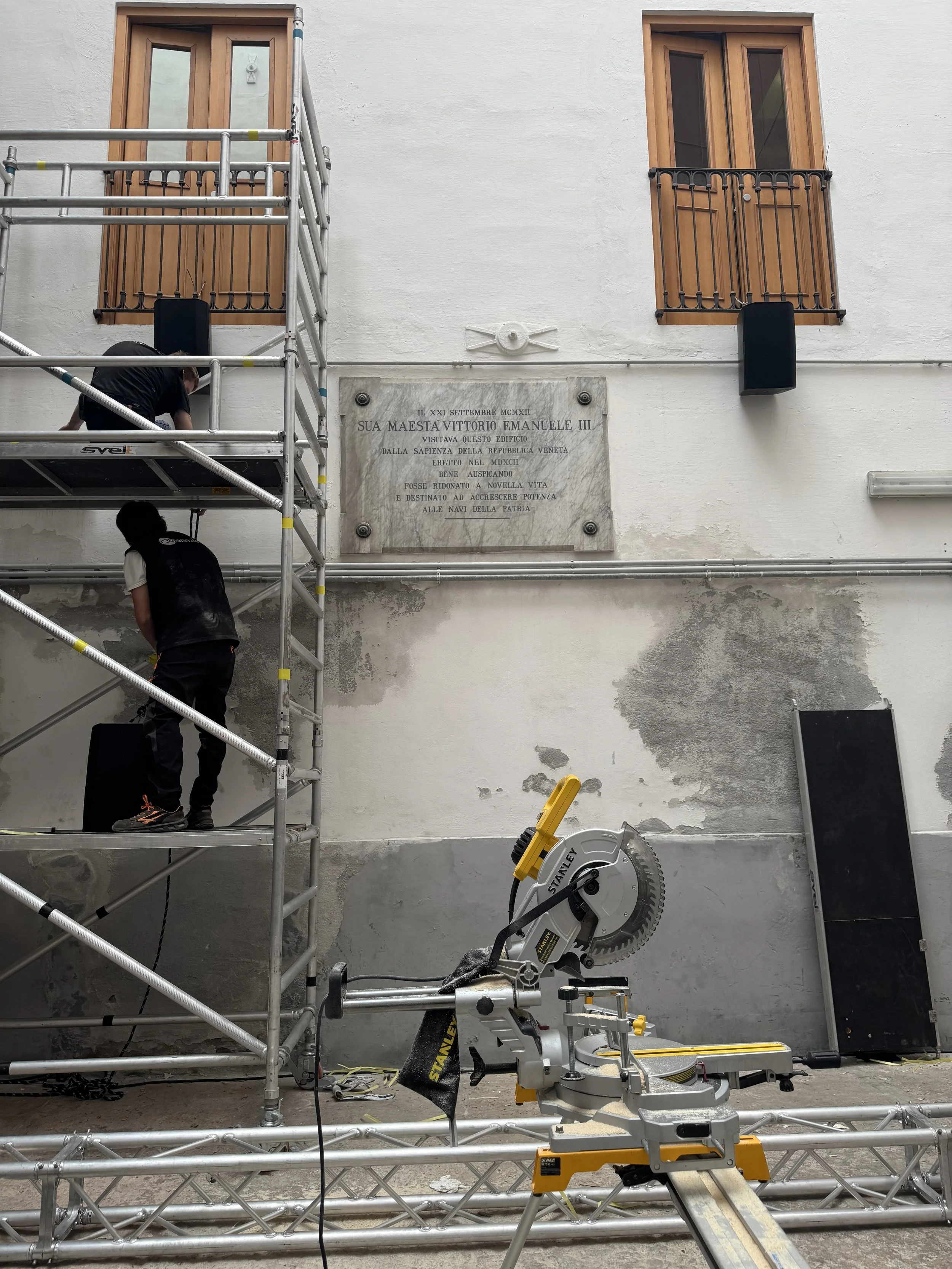
The curator's proposal to unfold the word dübir into a concept tied the whole narrative of the pavilion together. The exhibition is divided vertically. Smail Bayaliyev's sculpture Steppe Architectonics stood in the courtyard, while the topmost level of the building held works by other artists carrying the substance of The Archive of Silence: repression, nuclear testing and healing, gathered like materials that had been kept closed for decades. The glass-roofed courtyard let me work across a wide frequency and dynamic range. I wanted to build a vertical of sound, so that it travels from the courtyard upwards to the top of the building, carried by a dense low-frequency foundation (sub-bass). The rhythm of a typewriter entered the piece later than the other elements, as a metaphor of historical denunciations and an act of sonic solidarity with Asel Kadyrkhanova, whose work (a typewriter) was censored during the current Biennale.
Material
The curatorial concept proceeded from the küy Qoñyr, a work that carries the experience of Asharshylyq, the famine of 1931 to 1933, so working with it became a natural part of the project. At the same time I wanted to detach this traditional sound from its usual historical context and treat it as purely acousmatic material. The sonic landscape is built on a radical deconstruction of two elements:
— The archival recording of the küy Qoñyr. The composer's own performance, by Äbiken Khasenov, broken apart and reassembled through electroacoustic processing, including granular synthesis.
— The sound of hooves. This element was embedded in the initial concept of dübir. I kept it, but subjected it to extreme time-stretching. Stripped of its direct rhythm, and of its stereotypical reading, it turned into an all-encompassing, disquieting rumble.
Technical realisation
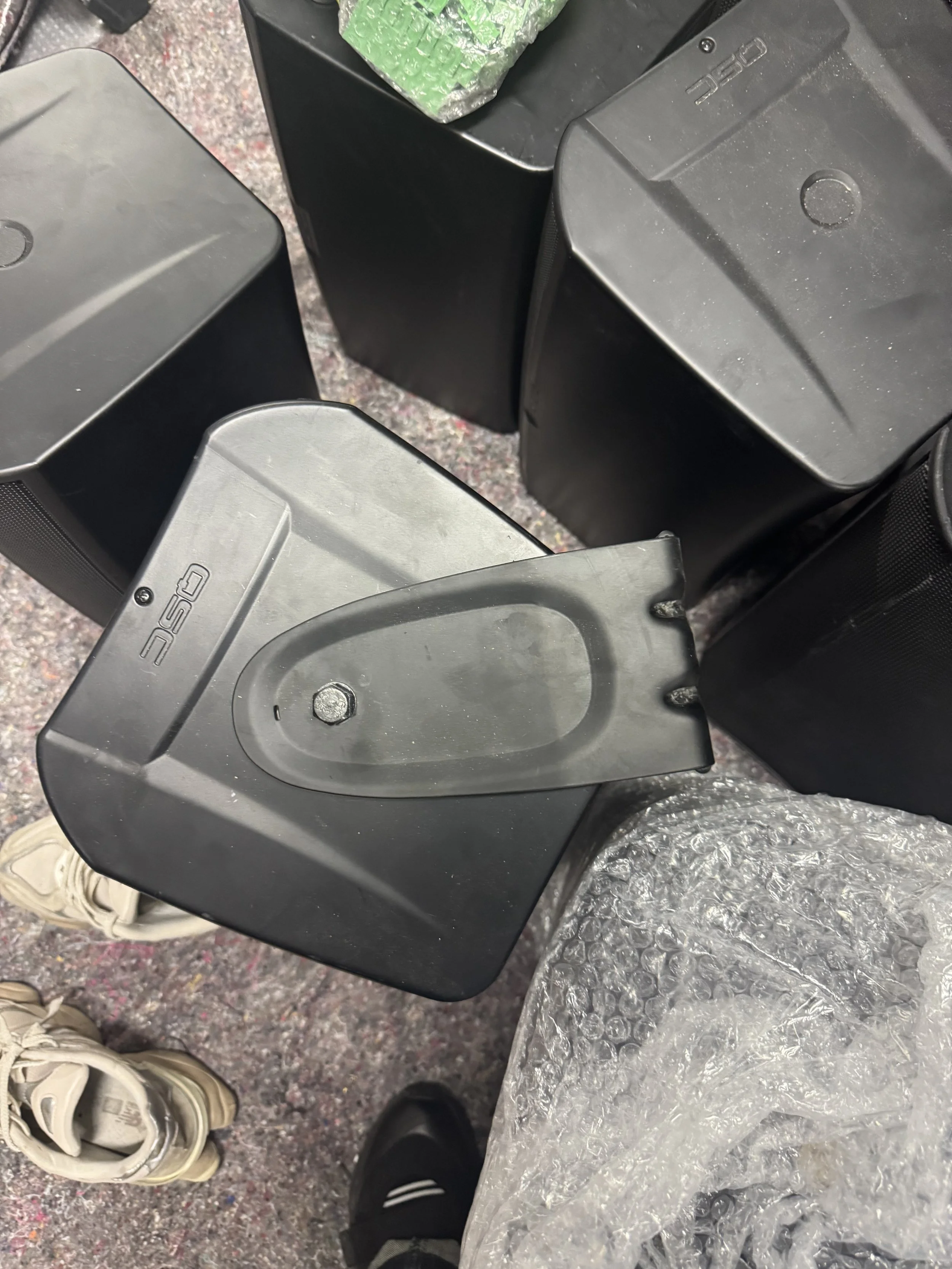
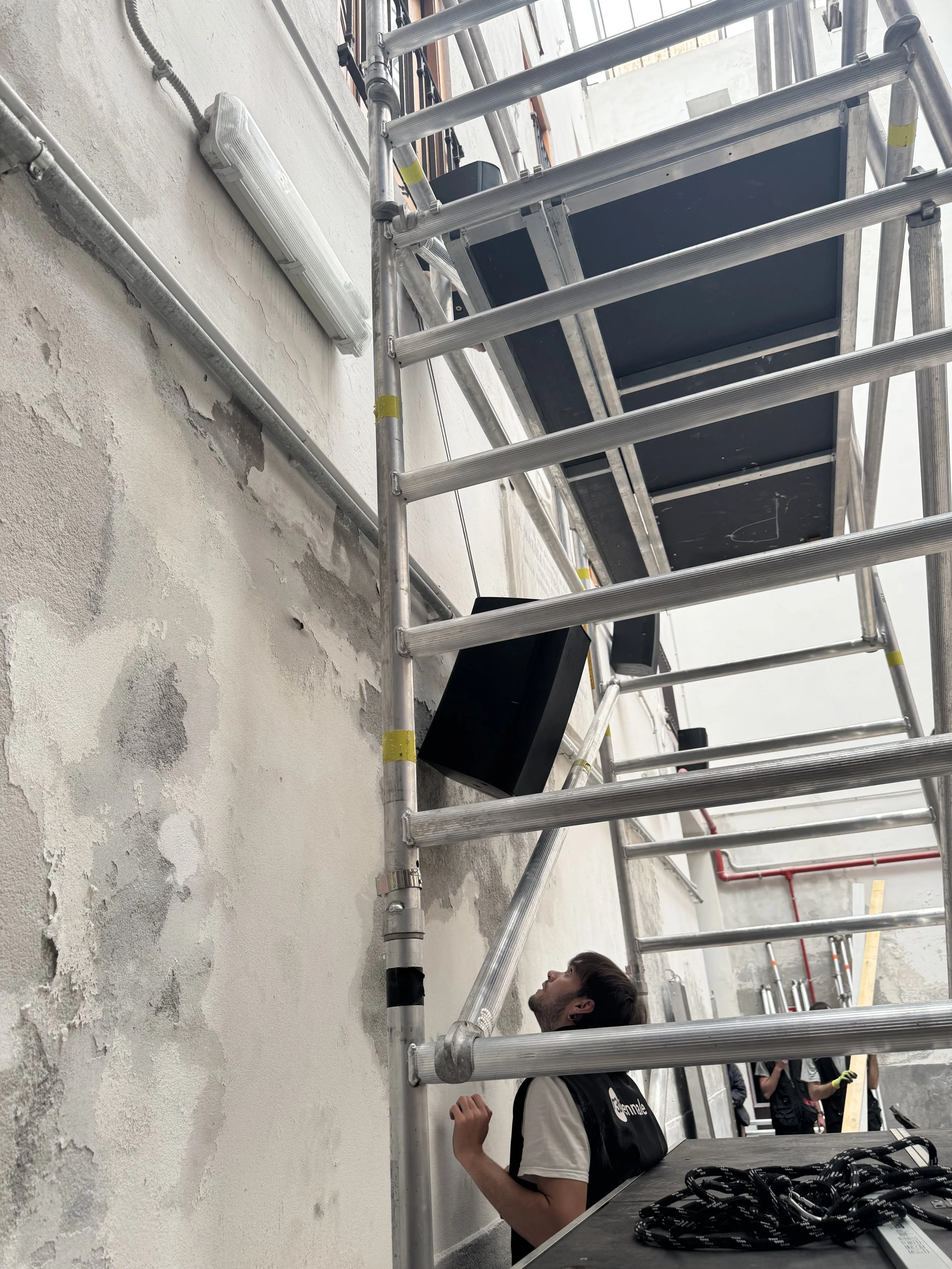
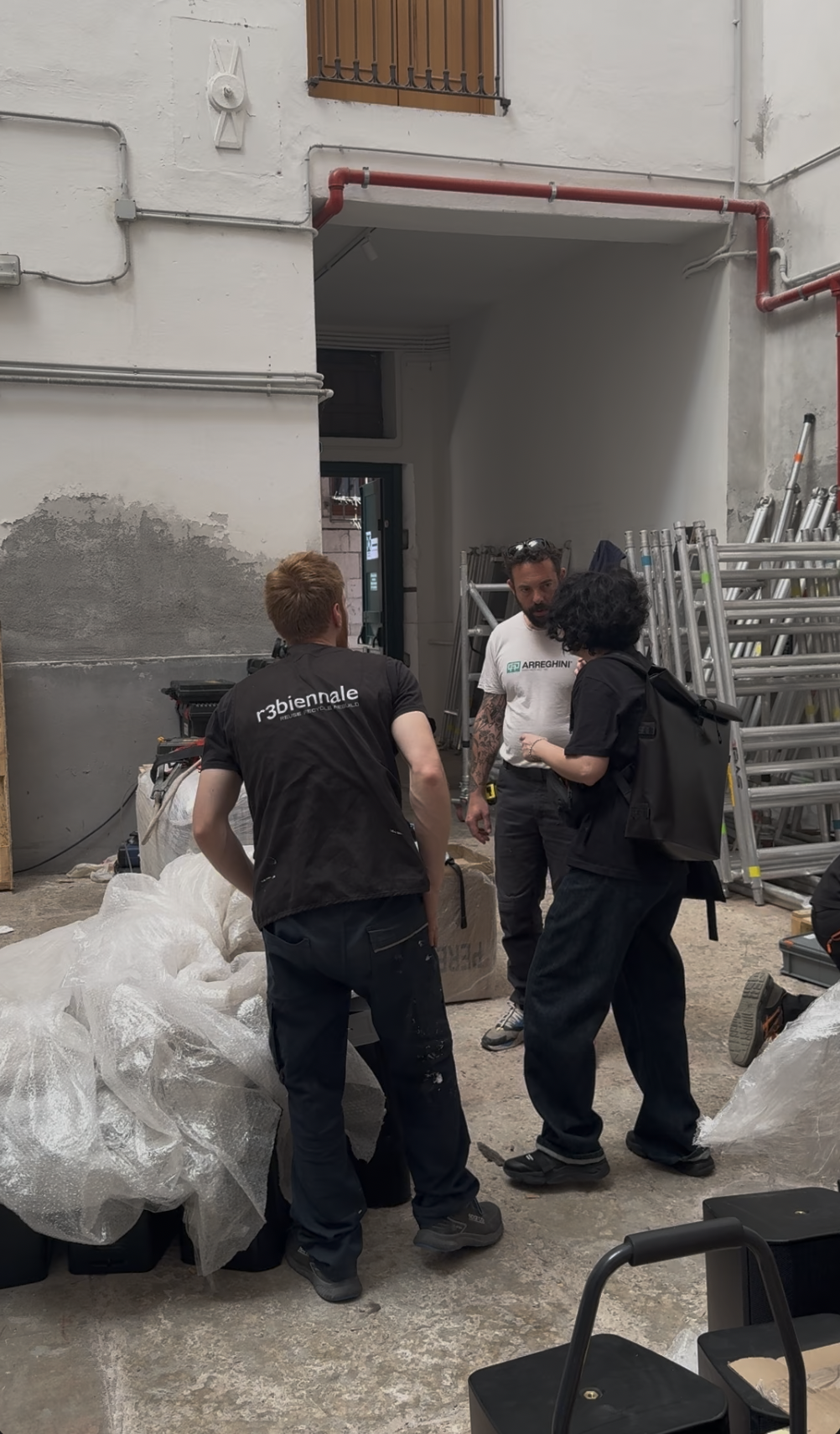
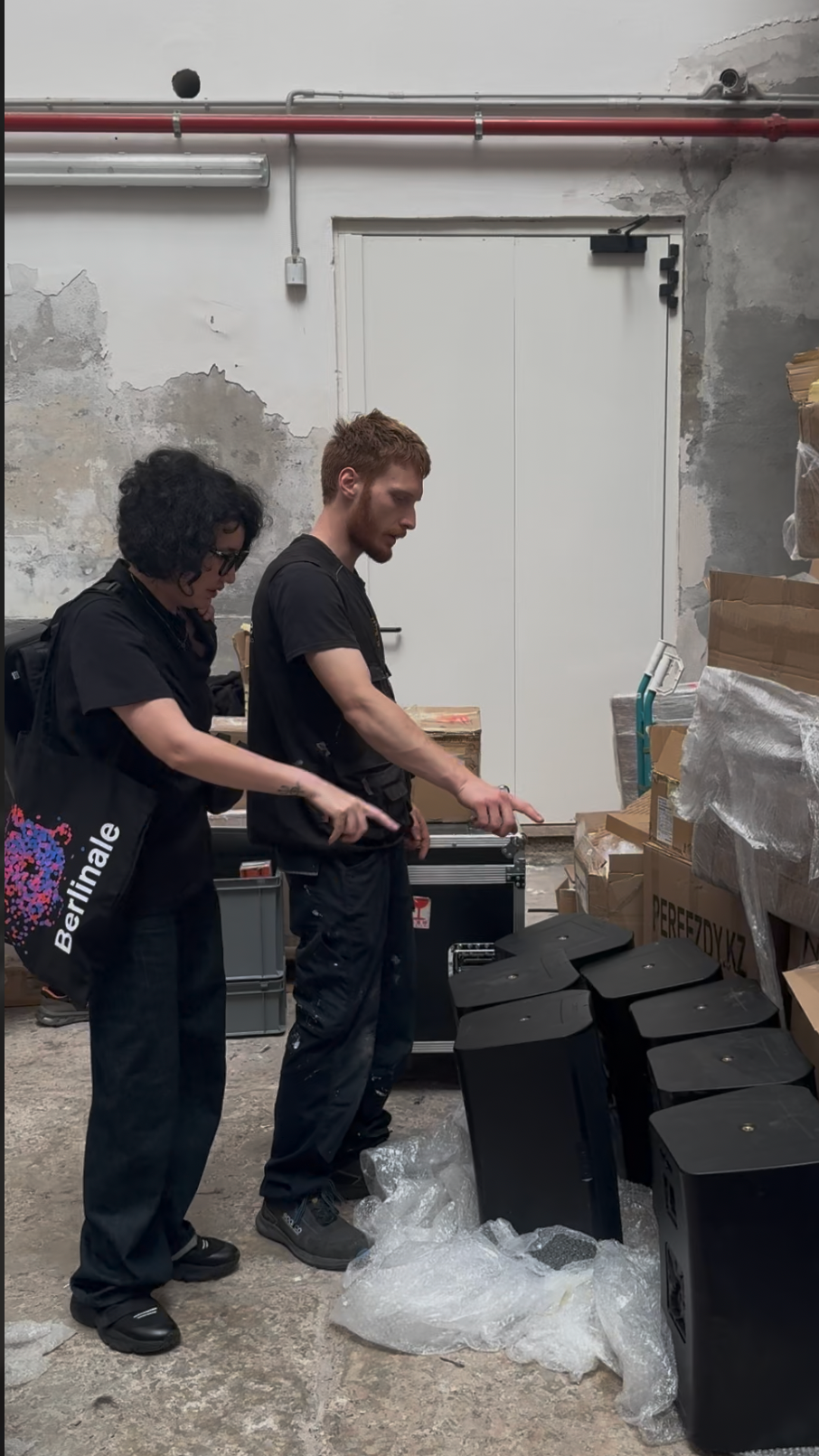
7.1.2, ten channels, with the low-frequency channel driven by two subwoofers. The configuration followed the architectural and electrical conditions of the Museo Storico Navale.

© 2026 Akmaral Mergen. All Rights Reserved.
All original audio stems, multi-channel routing schematics, and DAW project files are the exclusive intellectual property of the sound artist.
Unauthorized exhibition, reproduction, or spatial redistribution of this audio work without the direct permission of the composer is strictly prohibited.